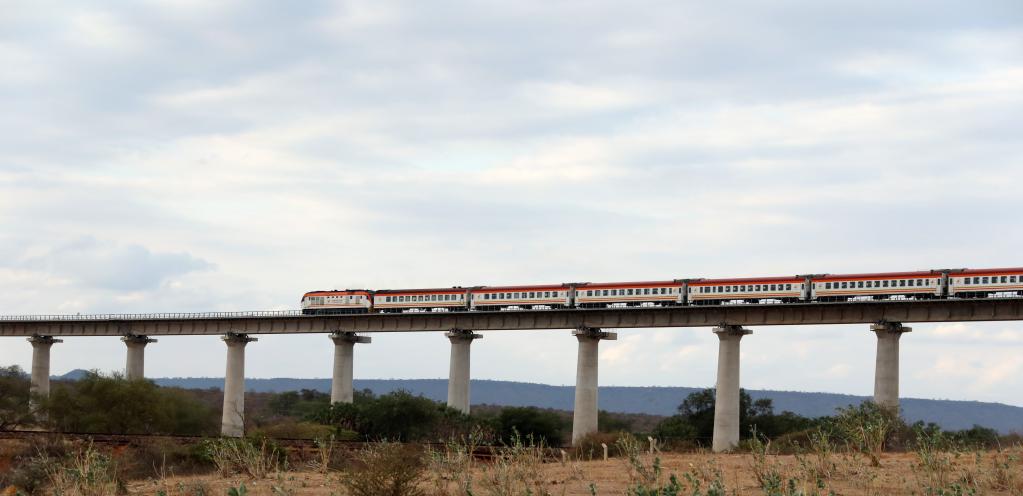
How Kenya’s Railway Revival Could Open a New Tourism Route to the West
When President William Ruto launched the long delayed Naivasha to Kisumu to Malaba Standard Gauge Railway extension in Narok on March 19, 2026, most of the conversation focused on trade, cost, and regional transport. The figures were large, the promises were ambitious, and the political symbolism was hard to miss. But beneath the headlines, another story was quietly waiting to be told. It was a tourism story.
Why this matters for tourism
- The railway could make western Kenya easier for travelers to reach
- Kisumu could grow into a stronger tourism and conference city
- Towns along the route could attract hotels, restaurants, and local travel businesses
- Kenya could begin building new travel routes beyond Nairobi, the coast, and the Mara
For years, Kenya’s tourism image has rested on a few famous places. Nairobi. Mombasa. Diani. Maasai Mara. They are beautiful, established, and deeply loved. But they are not the whole country. Beyond them lies another Kenya with lakeside cities, green highlands, market towns, cultural heritage, and landscapes that have never fully entered the mainstream tourism spotlight.
The railway extension could help change that.
The project, which stretches from Naivasha toward Kisumu and finally to Malaba at the border, is expected to cut through several counties and link towns that many travelers rarely think about when planning a trip. That matters because tourism is not only about attractions. It is also about access. A place can be wonderful, but if getting there feels difficult, tiring, or too uncertain, many people will choose somewhere easier.
Why western Kenya stands to benefit
Western Kenya has long had the ingredients of a strong tourism region. Kisumu sits on the shores of Lake Victoria with a character that feels different from the rest of the country. It has a slower rhythm, a strong food culture, beautiful sunsets, and access to places like Dunga Beach, Kit Mikayi, Ndere Island, and Impala Sanctuary. Yet for many travelers, it has remained more of an idea than a regular stop on the tourism map.
A stronger rail connection could begin to change that reality. It could make Kisumu feel closer, simpler, and more inviting for domestic tourists, conference guests, business travelers, and international visitors looking to go beyond the usual route. The planned branch line to the proposed new Kisumu Port adds even more weight to the city’s future as a gateway for movement, trade, and travel.
And it is not only Kisumu. The stations planned in places such as Narok, Mulot, Bomet, Sotik, Sondu, Ahero, Yala, and Mumias could slowly turn overlooked stops into points of interest. Some may become entry points to local experiences. Others may attract small hotels, roadside businesses, food spots, and transport services. This is often how tourism begins to spread. A route opens, people start arriving, and local enterprise begins to grow around that movement.
A new way to travel through Kenya
There is also something important about the train itself. Rail travel gives people time to see the country changing around them. The landscape does not flash past in the way it does from an airplane window. It unfolds. Fields, towns, hills, and people appear one after the other. The journey becomes part of the memory.
That matters in tourism because people do not only remember where they went. They remember how they got there. A railway creates the possibility of travel that feels scenic, comfortable, and less stressful. Families can move with ease. Groups can travel together. Visitors can enjoy the journey instead of only enduring it.
Kenya has already seen how rail can reshape travel habits between Nairobi and Mombasa. What once felt like a major journey is now normal for many travelers. If the western extension succeeds, a similar shift could happen in the lake region and beyond.
More than cargo and commuters
Much of the official language around the new line talks about freight capacity, logistics efficiency, trade competitiveness, and regional integration. Those are all important. But tourism should not be treated as an afterthought. A line built for movement can also move an entire region into the national imagination.
This project could help create new travel circuits in Kenya. A visitor might land in Nairobi, move through the Rift Valley, continue to Kisumu, spend time by the lake, and return with a very different understanding of the country. Domestic travelers may begin to plan more weekend escapes to the west. Tour operators could design new packages around culture, food, landscape, and slower travel. County governments along the line may also find new reasons to invest in cleaner public spaces, better signage, visitor experiences, and destination branding.
The opportunity comes with responsibility
Still, a railway on its own is not enough. Tourism grows when transport is matched with planning. Stations need good roads, reliable local transport, and nearby visitor services. Towns need places worth stopping for. Destinations need to be promoted well. Safety, cleanliness, hospitality, and local participation all matter.
There are also bigger national questions. The project comes with a heavy price tag of more than Ksh.500 billion, and criticism around debt, financing, and long term returns will not disappear. Those debates are serious and necessary. Yet even within that debate, tourism deserves a stronger voice, because the value of a railway is not only measured in cargo tonnage and balance sheets. It is also measured in what it makes possible for people, places, and stories.
A chance to widen Kenya’s tourism story
For too long, some parts of Kenya have carried the beauty of tourism without receiving the full benefits of tourism growth. The Naivasha to Kisumu to Malaba SGR extension may not change that overnight, but it could open the door. It could make western Kenya easier to reach, easier to imagine, and easier to include in the national travel conversation.
Sometimes tourism does not begin with a hotel or a park. Sometimes it begins with a route that finally makes a place feel within reach.
If this railway is completed and supported with smart planning, it could do more than connect counties. It could connect travelers to a broader, richer, and more complete Kenya. And for regions that have long waited to be more fully seen, that may be the most important journey of all.

Jacob Ogwonyo
Travel writer and storyteller at See My Kenya, sharing authentic Kenyan travel stories, destinations, and experiences from across the country and beyond.
Comments